Why Proper Land Preparation Determines Project Success
Whether you’re planning a home, a farm structure, a driveway, or a commercial build, what happens before construction begins will largely determine how smoothly the project goes—and how long it lasts. Many property owners focus on architectural plans, materials, and contractors while underestimating the importance of what lies beneath and around the building site.
Poor preparation leads to unstable foundations, drainage problems, erosion, unexpected costs, and delays that can derail an otherwise well-designed project. In contrast, well-planned land preparation protects your investment, minimizes long-term maintenance, and makes construction more efficient from day one.
This guide walks you through the essential services and decisions involved in preparing land correctly. You’ll learn how professionals evaluate a property, remove vegetation responsibly, shape terrain for stability, manage water, and sequence each phase so nothing has to be redone later. Whether you’re working with a small residential lot or a large rural parcel, understanding these steps will help you make smarter decisions and avoid costly mistakes.
Assessing Your Property Before Any Work Begins
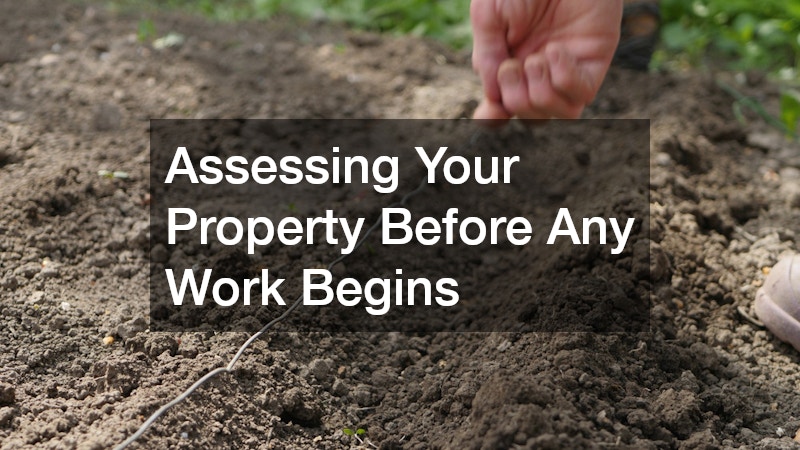
Before any equipment arrives, a thorough evaluation of your property is essential. Every successful project begins with understanding what you’re working with—topography, vegetation, soil type, drainage patterns, and access.
Professional land clearing and site work are not one-size-fits-all services. A wooded hillside requires a very different approach than a flat pasture or a wet, low-lying lot. Skipping this assessment phase often leads to over-clearing, poor drainage, or unstable building areas.
What to Evaluate During Your Initial Property Walk
When you (or a contractor) assess your land, look for:
-
Vegetation density and type: Light brush, mature trees, invasive species, and root systems all require different approaches.
-
Slope and elevation changes: Steep areas may need terracing or reinforcement.
-
Water flow patterns: Observe where water collects after rainfall and how it moves across the land.
-
Soil conditions: Sandy, clay, rocky, or loamy soils behave differently under load and moisture.
-
Access points: Identify where equipment can safely enter and where driveways or staging areas should be placed.
Planning Before Work Begins
A detailed plan ensures that each phase supports the next:
-
Determine which areas must be fully cleared and which can remain untouched.
-
Identify future structures, utilities, and access routes.
-
Confirm local permits, zoning rules, and environmental restrictions.
-
Set a realistic budget that accounts for unexpected obstacles such as hidden stumps, buried debris, or soft soil.
Starting with a professional assessment helps prevent rework, protects sensitive areas, and ensures that every dollar you spend moves the project forward.
Removing Light Growth Without Damaging Soil
Not all properties require aggressive vegetation removal. In many cases, the first step is addressing surface-level growth while preserving soil structure and root systems that prevent erosion.
Underbrush clearing is often used to remove small trees, shrubs, and tangled growth that restrict access or visibility. For open fields and lightly wooded areas, brush hogging can efficiently cut tall grass, weeds, and thin brush without disturbing the soil beneath.
When Light Clearing Is Enough
Light clearing methods are ideal when:
-
You need access for surveying, fencing, or inspections.
-
The land will remain mostly natural or agricultural.
-
You want to reduce fire hazards or control invasive species.
-
Full excavation or construction is not yet planned.
How to Avoid Common Mistakes
Even basic clearing should be done carefully:
-
Avoid over-clearing: Removing too much vegetation at once exposes soil to erosion and runoff.
-
Respect seasonal conditions: Clearing during wet months can compact soil and create ruts that require repair.
-
Control regrowth: After clearing, consider follow-up treatments or maintenance to prevent rapid regrowth.
Practical Tips
-
Mark trees or vegetation you want preserved before equipment arrives.
-
Clear in stages, starting with access paths and working outward.
-
Schedule clearing before grading or excavation to allow the soil to settle naturally.
Thoughtful early clearing creates a cleaner, safer site while preserving the integrity of the land.
Handling Heavy Vegetation While Preserving Land Quality
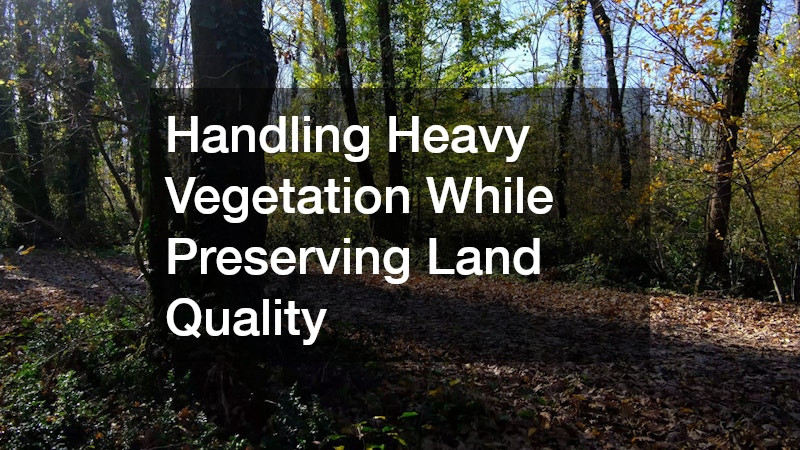
When properties are heavily wooded or overgrown, surface-level methods aren’t enough. Forestry mulching offers a way to remove dense vegetation without stripping away the topsoil. Instead of hauling debris offsite or burning it, vegetation is processed into fine mulch and distributed across the ground.
Professional mulching services are especially valuable for large tracts, uneven terrain, or environmentally sensitive areas where erosion control and soil health matter.
Why this Approach Works
Forestry mulching provides several advantages:
-
Minimal soil disturbance: Roots remain in place, reducing erosion.
-
Natural ground cover: Mulch protects against runoff and suppresses weeds.
-
No debris hauling: Eliminates the need for costly removal or burning.
-
Improved access: Creates navigable paths without leaving bare soil.
When to Choose this Method
This approach is ideal when:
-
Preparing land for future development without immediate construction.
-
Managing invasive species in wooded or semi-wooded areas.
-
Creating trails, access roads, or firebreaks.
-
Maintaining large rural properties efficiently.
What to Look for in a Provider
Before hiring mulching services, ask about:
-
Equipment size and suitability for your terrain.
-
Experience with similar property types.
-
How will the mulch depth be managed to avoid smothering the soil?
-
Post-service expectations: regrowth timelines, follow-up recommendations.
This method balances land usability with environmental responsibility, making it a popular choice for modern land management.
Clearing for Access, Foundations, and Utilities
As you move closer to construction, more thorough preparation becomes necessary. Ground clearing involves removing vegetation, roots, stumps, and surface obstacles to expose the soil for grading, excavation, and infrastructure.
Unlike earlier phases, this stage focuses on creating build-ready zones rather than simply improving access or aesthetics.
Planning Build Zones
Effective land clearing for construction should address:
-
Building pads: Areas where foundations will be poured must be completely free of organic material.
-
Utility corridors: Trenches for water, sewer, electrical, and gas lines require clean, stable access.
-
Staging areas: Equipment, materials, and vehicles need firm ground for safe operation.
-
Access routes: Temporary and permanent driveways should be established early.
Managing Roots and Stumps
Leaving roots beneath a structure can lead to:
-
Soil settles as organic matter decomposes.
-
Cracking in foundations or slabs.
-
Uneven surfaces that complicate grading.
Professional clearing ensures that problematic root systems are removed or properly treated before construction begins.
Practical Checklist
-
Clearly mark all future structures and utility paths.
-
Remove vegetation beyond the immediate footprint to allow room for equipment.
-
Inspect the cleared area for buried debris or soft spots before moving to the next phase.
This stage transforms raw land into a functional workspace where precise shaping and building can begin.
Shaping the Land for Stability, Drainage, and Access

Once the land is cleared, the next critical step is shaping it for stability and usability. Land grading is the process of leveling, sloping, and contouring terrain so that water drains properly and structures rest on solid ground.
Grading is a central part of professional site work and directly affects foundation integrity, erosion control, and long-term maintenance.
Why Grading Matters
Proper grading:
-
Directs water away from buildings and driveways.
-
Prevents pooling that leads to soil saturation and foundation damage.
-
Creates safe access routes for vehicles and pedestrians.
-
Reduces future landscaping and drainage costs.
Common Grading Strategies
-
Cut and fill: Excavating high areas and redistributing soil to low spots for a level surface.
-
Positive drainage slopes: Ensuring the ground slopes away from structures at a consistent rate.
-
Terracing: Stabilizing steep terrain with stepped levels.
What Property Owners Should Verify
Before approving grading work:
-
Confirm slope direction around all structures.
-
Ask how soil compaction will be handled to prevent settling.
-
Review how driveways and access roads will tie into the surrounding terrain.
-
Ensure erosion control measures (such as temporary berms or silt fencing) are in place.
Thoughtful grading turns uneven land into a stable foundation for everything that follows.
Solving Water Problems Before They Damage Your Build
Water is one of the greatest threats to any structure. Addressing drainage early—before foundations are poured—prevents moisture damage, soil movement, and costly retrofits later.
French drain installation is a proven method for redirecting groundwater away from critical areas. When paired with proper land grading, it provides both surface and subsurface protection.
Signs Your Property Needs Drainage Solutions
-
Persistent puddles after rain
-
Water flowing toward planned building sites
-
Erosion channels forming on slopes
-
Damp or spongy soil in low areas
How Drainage Systems Work
A French drain typically consists of:
-
A sloped trench
-
Perforated piping
-
Gravel backfill to allow water flow
-
Discharge points that direct water safely away
When combined with strategic grading, this system intercepts groundwater and channels it where it can disperse without causing damage.
Installation Tips
-
Plan drainage before installing foundations and hardscape.
-
Ensure outlets are positioned downhill from structures.
-
Avoid placing drains where they may clog with sediment or debris.
-
Schedule periodic inspections to maintain long-term performance.
By addressing water flow early, you protect both the structure and the surrounding landscape from avoidable damage.
Incorporating Water Features Without Creating Future Issues
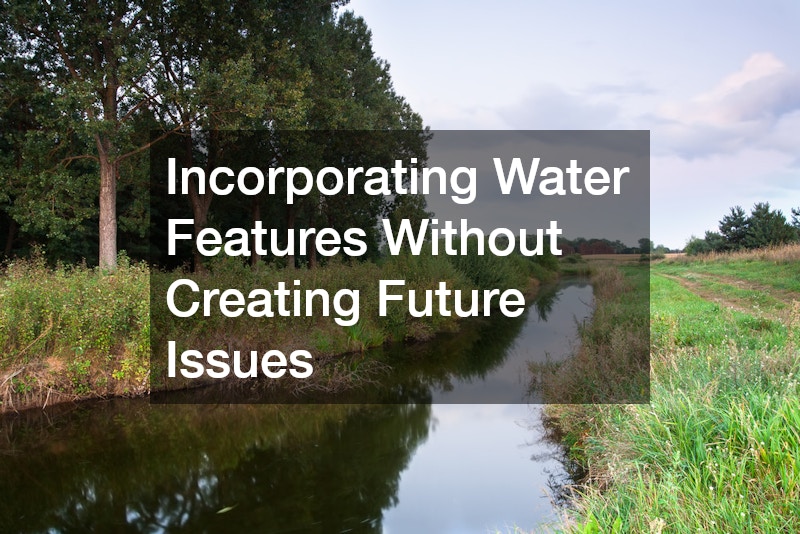
Water features can add value, beauty, and functionality to a property—but only if they’re designed and installed correctly. Ponds that are poorly planned can cause erosion, flooding, and maintenance headaches.
Professional pond contractors integrate water features into the broader site work plan, so they complement rather than compromise the project.
When to Plan a Pond
Ponds should be designed early in the preparation process:
-
Excavation is easier before final grading and construction.
-
Drainage patterns can be adjusted to accommodate water flow.
-
Overflow routes and erosion control can be built into the layout.
What Professionals Consider
Experienced pond contractors evaluate:
-
Natural drainage and watershed size
-
Soil composition and permeability
-
Spillway placement for overflow control
-
Safety considerations for nearby structures and access areas
Key Planning Tips
-
Never place a pond where runoff could threaten buildings.
-
Incorporate buffer zones with vegetation to reduce erosion.
-
Confirm local regulations regarding water management and environmental impact.
With proper planning, a pond becomes an asset rather than a liability.
Choosing the Right Clearing Method for Your End Goal
Not all properties need the same type of clearing. Selecting the right method depends on your intended use, terrain, and timeline.
Brush hogging is efficient for light vegetation and maintenance, while forestry mulching excels in dense or uneven areas where soil preservation is critical.
Matching Method to Purpose
-
For agricultural use: Brush hogging keeps fields manageable without disturbing soil.
-
For future development: Forestry mulching prepares land while protecting topsoil.
-
For trails and access paths: Mulching creates stable routes with minimal disruption.
-
For fire prevention: Both methods can create defensible spaces when applied strategically.
How to Evaluate Results
After clearing:
-
Check for uneven debris distribution.
-
Look for exposed roots that may require follow-up treatment.
-
Confirm that soil structure remains intact and erosion is controlled.
Questions to Ask Contractors
-
What equipment will be used and why?
-
How will sensitive areas be protected?
-
What maintenance or follow-up is recommended?
Choosing the correct method ensures efficiency, cost control, and long-term land health.
Sequencing Your Land Prep for Efficiency and Cost Control
One of the most common and costly mistakes is performing tasks out of order. When ground clearing and land grading are not correctly sequenced, work may need to be redone, increasing both time and expense.
Ideal Order of Operations
-
Initial assessment and planning
-
Light vegetation removal
-
Heavy clearing and root removal
-
Rough grading for drainage and access
-
Drainage system installation
-
Final grading and compaction
Why Order Matters
-
Clearing after grading can undo carefully shaped slopes.
-
Installing drainage too late may require trenching through finished surfaces.
-
Skipping compaction leads to settling under foundations and driveways.
Timing Considerations
-
Avoid major earthwork during prolonged wet periods.
-
Allow soil to settle between phases when possible.
-
Coordinate with utility providers to prevent re-excavation.
Strategic sequencing keeps the project moving forward without backtracking.
Budgeting and Hiring the Right Professionals
A well-prepared site saves money in the long run—but only if the work is done correctly. Hiring the right professionals is as important as choosing the right methods.
What Affects Cost
-
Property size and accessibility
-
Vegetation density and terrain
-
Soil conditions and drainage needs
-
Equipment requirements
-
Regulatory compliance and permits
How to Evaluate Providers
When comparing mulching services, pond contractors, and other specialists, look beyond price:
-
Verify licensing and insurance.
-
Request examples of similar projects.
-
Ask for detailed scopes of work.
-
Understand what is included—and what isn’t—in the estimate.
Questions to Ask Before Signing
-
What challenges do you foresee on my property?
-
How will you protect the soil and the surrounding areas?
-
What is the projected timeline?
-
What happens if unexpected issues arise?
Investing in experienced professionals prevents costly mistakes and ensures your land is truly ready for what comes next.
Preparing the Land Is the First Step to Building Right
Every successful project starts below the surface. By understanding how land is evaluated, cleared, shaped, and protected, you gain control over the outcome of your build long before construction begins. Proper preparation safeguards your foundation, manages water, preserves soil, and reduces long-term maintenance.
Whether your goal is a home, a farm, or a commercial site, taking the time to prepare your property correctly is not an added expense—it’s a critical investment. With the right planning, sequencing, and professional support, you set the stage for a project that is stable, efficient, and built to last.