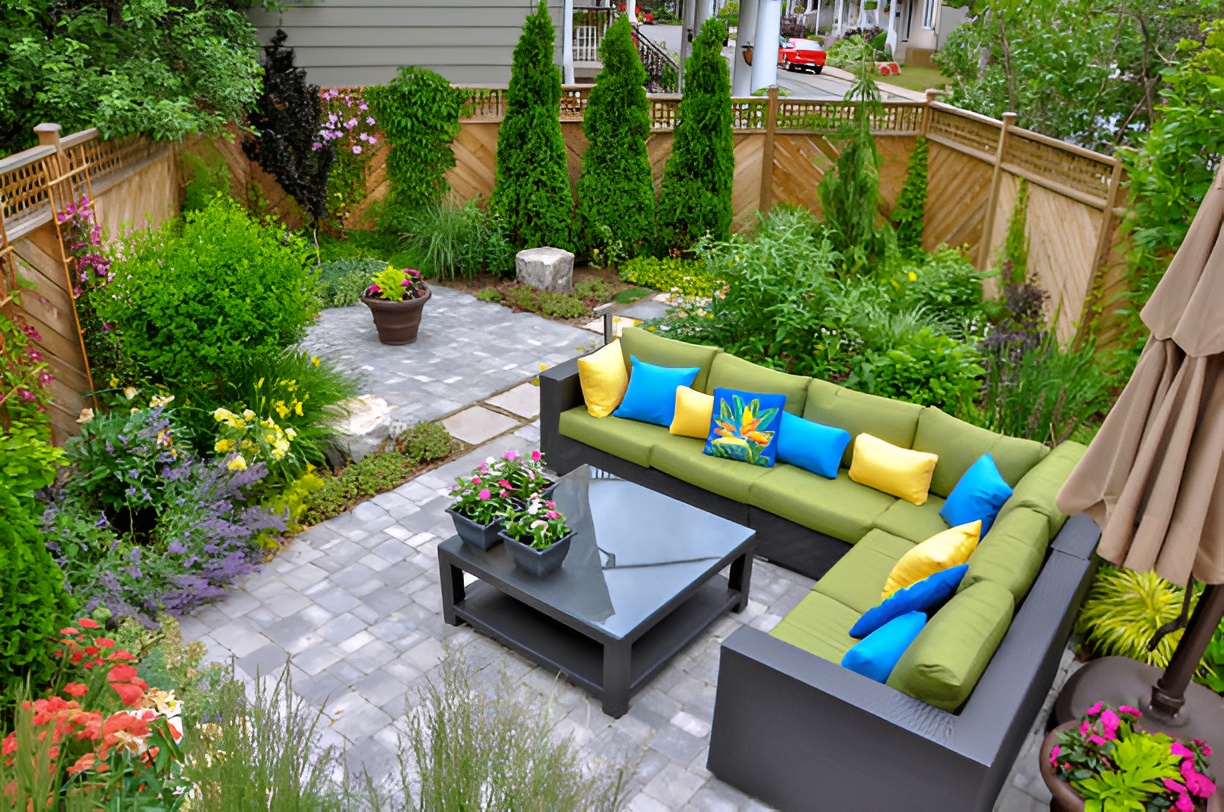
- Start with a solid plan: Sketch a layout to organize zones, paths, and focal points, making your backyard functional and visually appealing.
- Choose plants wisely: Consider climate, soil, size, seasonal interest, and maintenance needs to create a cohesive and inviting landscape.
- Incorporate paths and walkways: Use curves, varied materials, and lighting to connect zones and add character while protecting your lawn and plants.
- Create functional zones: Design areas for outdoor living, gardening, play, relaxation, and privacy to improve flow and usability.
- Add features for interest and utility: Include water features, vertical landscaping, lighting, and structures like pergolas or fire pits for beauty and practicality.
- Plan for low-maintenance and seasonal changes: Use drought-resistant plants, mulch, and evergreen or seasonal elements to ensure year-round enjoyment with minimal upkeep.
Designing a large backyard can feel like a big challenge, but it also comes with incredible opportunities. With the right planning, you can turn your outdoor space into a stunning oasis that balances beauty, function, and enjoyment. In this guide, we’ll cover large backyard landscaping ideas, focusing on plants, paths, and layout tips to help you make the most of your space.
Why Planning Matters for Large Backyards
Before diving into plant selection or decorative elements, it’s essential to plan your layout. Large backyards can easily feel overwhelming without structure. Proper planning helps you make the most of your space and ensures your backyard is both functional and visually appealing. If you’re looking for large backyard ideas, starting with a clear plan will help you organize zones, paths, and focal points while keeping everything cohesive. Planning also allows you to:
- Make the most of your space.
- Create distinct zones for relaxation, play, or gardening.
- Ensure your landscaping is practical and low-maintenance.
- Incorporate natural flow and accessibility.
Start by sketching a rough layout of your backyard. Identify focal points, existing features, and areas that need privacy. This will help you visualize how different elements can work together.
How to Choose the Right Plants

Plant selection is key to making your large backyard feel inviting and cohesive. Consider these factors when choosing plants:
- Climate and soil type: Choose plants suited to your region and soil for easier maintenance. Native plants often thrive with minimal care.
- Size and growth patterns: Large yards allow for trees and shrubs that provide structure and shade. Keep in mind mature sizes to avoid overcrowding.
- Color and seasonal interest: Incorporate a mix of flowering plants, evergreens, and seasonal favorites for year-round beauty.
- Maintenance requirements: Group high-maintenance plants in areas you can easily access for care.
Some popular plant ideas for large backyards include:
- Trees: Oak, maple, magnolia, or fruit trees provide shade and vertical interest.
- Shrubs: Hydrangeas, azaleas, boxwoods, or lilacs add texture and volume.
- Perennials: Lavender, coneflowers, hostas, and daylilies create long-lasting beauty.
- Groundcovers: Creeping thyme, sedum, or clover reduce weeds and soften pathways.
What Are the Best Paths and Walkways?
Paths are more than just functional—they guide visitors through your backyard and add character. In a large backyard, paths can:
- Connect different zones like patios, gardens, and water features.
- Add visual interest through curves, materials, and lighting.
- Reduce wear on your lawn and protect plants.
Popular path materials for large backyards include:
- Gravel or crushed stone: Affordable and easy to install, with natural appeal.
- Pavers or bricks: Durable and classic, offering clean lines and patterns.
- Flagstone: Creates a rustic or natural look for meandering paths.
- Wood chips or mulch: Ideal for garden pathways and informal areas.
Consider using curves or meandering paths instead of straight lines. They make your backyard feel larger and more natural while encouraging exploration.
How to Create Zones in a Large Backyard
Large backyards benefit from defined zones. These zones help organize space, provide purpose, and improve flow. Some popular backyard zones include:
- Outdoor living areas: Patios, decks, or pergolas for dining and entertaining.
- Garden zones: Flower beds, vegetable patches, or raised planters.
- Play areas: Lawns, sandboxes, or sports spaces for kids.
- Relaxation spots: Hammocks, benches, or water features for quiet retreats.
- Privacy areas: Hedges, screens, or tall plants to create secluded corners.
Using plants, paths, and furniture strategically can help separate zones without creating walls, keeping your backyard feeling open yet organized.
How to Incorporate Water Features

Water features add movement, sound, and beauty to large backyard landscapes. Some ideas include:
- Ponds or small lakes: Great for large properties, adding a natural focal point.
- Fountains: Can be formal or modern, providing soothing water sounds.
- Waterfalls or streams: Ideal for creating a serene, natural atmosphere.
- Birdbaths or small ponds: Attract wildlife and add charm in smaller zones.
When planning water features, consider safety, maintenance, and placement. Position them where they are visible from your house or seating areas for maximum enjoyment.
How to Use Lighting for Landscaping
Lighting transforms a backyard after sunset and highlights key features. It also improves safety along pathways and entrances. Consider these lighting ideas:
- String lights: Perfect for patios, pergolas, or tree canopies.
- Pathway lights: Illuminate walkways while adding aesthetic appeal.
- Spotlights: Highlight trees, sculptures, or water features.
- Solar lights: Eco-friendly and easy to install in any location.
Plan lighting to enhance both ambiance and functionality, making your backyard enjoyable day and night.
What Are Some Tips for Lawn and Grass Care?
A healthy lawn is the backbone of a large backyard. Follow these tips for maintenance:
- Choose the right grass type for your climate.
- Mow regularly to maintain height and promote healthy growth.
- Fertilize seasonally to keep the lawn lush.
- Aerate the soil to improve water and nutrient absorption.
- Water deeply but less frequently to encourage strong roots.
Mixing lawn areas with garden beds, patios, or paths can also reduce the amount of grass to maintain while adding visual interest.
How to Add Functional Structures
Functional structures can enhance your backyard while making it more usable:
- Pergolas and gazebos: Provide shade and a visual anchor.
- Fire pits: Encourage year-round outdoor gatherings.
- Sheds or greenhouses: Add storage and gardening options.
- Retaining walls or terraces: Manage slopes and create level planting areas.
These structures can serve as both practical and decorative elements in your backyard design.
How to Incorporate Vertical Landscaping
In large backyards, vertical landscaping adds height, dimension, and privacy. Ideas include:
- Trellises and arbors: Perfect for climbing plants like roses, clematis, or wisteria.
- Living walls: Great for herbs or small flowers on patios or fences.
- Hedges and tall shrubs: Create natural barriers or zones.
- Layered planting beds: Build raised or tiered garden beds for visual interest.
Vertical elements break up open space and can also reduce wind and provide shade in sunny areas.
How to Blend Natural and Modern Elements
A harmonious backyard blends natural beauty with functional design. Some ideas include:
- Pair stone or gravel paths with lush garden beds.
- Use wooden structures alongside contemporary furniture.
- Incorporate native plants with sculptural features or modern lighting.
- Mix organic shapes with clean, geometric lines in patios or lawns.
Balancing natural and modern elements creates a backyard that’s both relaxing and stylish.
How to Plan for Seasonal Changes
Large backyards need year-round planning. Consider:
- Evergreens and shrubs: Keep the landscape interesting in winter.
- Seasonal flowers: Add color in spring and summer.
- Fall foliage: Plant trees and shrubs that offer vibrant autumn colors.
- Winter interest: Use structural elements like trellises or ornamental grasses for texture.
Planning for all seasons ensures your backyard remains inviting and beautiful throughout the year.
How to Incorporate Outdoor Entertainment Areas
For large backyards, entertainment areas can be a focal point:
- Outdoor kitchens: Great for BBQs and hosting guests.
- Dining areas: Use pergolas or umbrellas for shade.
- Seating zones: Include benches, loungers, or sectional furniture.
- Game areas: Bocce, volleyball, or putting greens make your backyard fun for all ages.
Integrate these spaces with paths and plants to maintain flow and cohesion.
Tips for Low-Maintenance Landscaping
Even in a large backyard, you can reduce time spent on upkeep:
- Use drought-resistant or native plants.
- Install mulch around plants to retain moisture and reduce weeds.
- Choose low-maintenance grasses or groundcovers.
- Consider automated irrigation systems.
- Group plants with similar care needs together.
Low-maintenance landscaping allows you to enjoy your backyard without feeling burdened by constant upkeep.
Common Mistakes to Avoid in Large Backyard Landscaping
When planning your backyard, avoid these pitfalls:
- Overcrowding plants or structures, which can feel cluttered.
- Ignoring natural slopes, drainage, or soil conditions.
- Focusing too much on trends instead of practical needs.
- Forgetting scale—small furniture or tiny features can get lost in large spaces.
- Neglecting pathways, lighting, or maintenance access.
Keeping these tips in mind will save you frustration and help your backyard thrive.
In a Nutshell
Landscaping a large backyard is a rewarding project that blends creativity, functionality, and personal style. By carefully planning your layout, choosing the right plants, creating paths and zones, and incorporating lighting, water features, and functional structures, you can transform your outdoor space into a stunning retreat.
Remember to balance aesthetics with practicality, plan for seasonal changes, and consider low-maintenance options to keep your backyard beautiful year-round. With these large backyard landscaping ideas, your yard can become a haven for relaxation, entertainment, and natural beauty.